
Cordyceps vs Creatine: Which Should Gym-Goers in India Choose?
Walk into any supplement store or browse any fitness forum in India and you’ll find a perennial debate: Cordyceps or creatine? Natural mushroom extract or the most researched sports supplement in history?
The honest answer is that this is a false choice — they do fundamentally different things. But understanding what each one actually does will help you decide whether you need one, the other, or both.
What Creatine Does
Creatine monohydrate is the most research-backed sports supplement available. Over 500 peer-reviewed studies confirm its efficacy for specific performance outcomes.
Creatine works by increasing phosphocreatine stores in muscle tissue. Phosphocreatine is used to rapidly regenerate ATP (adenosine triphosphate) during short, high-intensity efforts — the kind that last 1–10 seconds. Think: a heavy squat set, a 100m sprint, an explosive basketball move.
What creatine does well:
- Increases maximal strength output in short bursts
- Improves power in explosive, anaerobic activities
- Supports muscle volumisation (draws water into muscle cells)
- Some evidence for cognitive performance under stress
- Well-tolerated with minimal side effects at standard doses (3–5g/day)
What creatine doesn’t do: it has minimal impact on aerobic endurance, oxygen utilisation, or sustained cardiovascular performance. A marathon runner or cyclist would get limited benefit from creatine. A powerlifter or sprinter would get significant benefit.
What Cordyceps Does
Cordyceps works through a completely different pathway. Its primary active compound, cordycepin, structurally resembles adenosine and appears to enhance ATP synthesis efficiency in mitochondria — not by storing more phosphocreatine, but by making cellular energy production more efficient at a fundamental level.
What Cordyceps does well:
- Improves VO₂ max and oxygen utilisation — the key metric for aerobic endurance
- Reduces perceived exertion during sustained cardiovascular effort
- Supports faster recovery between training sessions through anti-inflammatory effects
- Adaptogenic effects — helps the body handle physical stress more efficiently over time
- No water retention, no loading phase, no digestive side effects
What Cordyceps doesn’t do: it won’t increase your one-rep max. It won’t make you more explosive in a 5-second burst. It works on aerobic systems, not anaerobic ones.
The Anaerobic vs. Aerobic Divide
This is the core of the comparison. Creatine and Cordyceps operate on different energy systems:
Creatine → phosphocreatine system → anaerobic → short, explosive, high-intensity efforts
Cordyceps → mitochondrial ATP efficiency + oxygen utilisation → aerobic → sustained endurance, cardiovascular performance, recovery
Most gym-goers in India do a mix of both — weight training (anaerobic) and some form of cardio, HIIT, or sport (aerobic). If that’s your profile, both supplements address real gaps in your physiology, through non-overlapping mechanisms.
Who Should Prioritise Creatine?
- Powerlifters, bodybuilders, strength athletes
- Sprinters and explosive sport athletes (football, basketball, cricket fast bowlers)
- Anyone whose primary goal is maximum strength and muscle mass
- Beginners to supplements who want the highest evidence-to-cost ratio
Who Should Prioritise Cordyceps?
- Endurance athletes — runners, cyclists, swimmers, rowers
- CrossFit athletes where cardiovascular capacity is a limiter
- Gym-goers who find their cardio capacity is their weak link
- Anyone who wants performance support without synthetic stimulants
- Those concerned about long-term health and recovery, not just acute performance
Can You Take Both?
Yes — and for many athletes, this is the optimal approach. There are no known negative interactions between creatine and Cordyceps. They work on different systems, support different performance qualities, and complement each other well.
A typical stacking approach:
- Creatine: 3–5g daily, consistently (no loading phase required for most people)
- Cordyceps: standard dose daily, taken 30–60 minutes before training or in the morning
Together, you’re covering both energy systems: maximum strength and power output (creatine) plus aerobic efficiency and recovery (Cordyceps).
What About Creatine + Pre-Workout?
Many Indian gym-goers take creatine alongside stimulant-based pre-workouts (caffeine, beta-alanine, citrulline). Cordyceps can replace or reduce reliance on stimulant pre-workouts for those who want sustained energy without the crash, dependence risk, or sleep disruption that high-caffeine products can cause.
Cordyceps doesn’t give you the immediate “pump” feeling of a stimulant pre-workout. It works more subtly — you may notice that your sustained effort is longer, your recovery between sets is faster, and your cardiovascular performance improves over weeks. It’s a different category of performance support.
Cost Comparison in India
Creatine monohydrate is one of the cheapest effective supplements available — quality creatine in India runs ₹400–800 for a month’s supply. Cordyceps is more expensive, typically ₹900–1,500+ per month for a quality fruiting body extract.
If budget is a constraint: start with creatine if strength is your primary goal. Add Cordyceps when your budget allows, particularly if endurance or recovery is a limiter.
Bottom Line
Creatine and Cordyceps aren’t competitors — they’re tools for different jobs. Creatine is for anaerobic power and strength. Cordyceps is for aerobic capacity, endurance, and recovery. For gym-goers doing a mix of strength and cardio, both are worth considering.
The decision isn’t either/or. It’s: which gap in your performance do you need to address first?
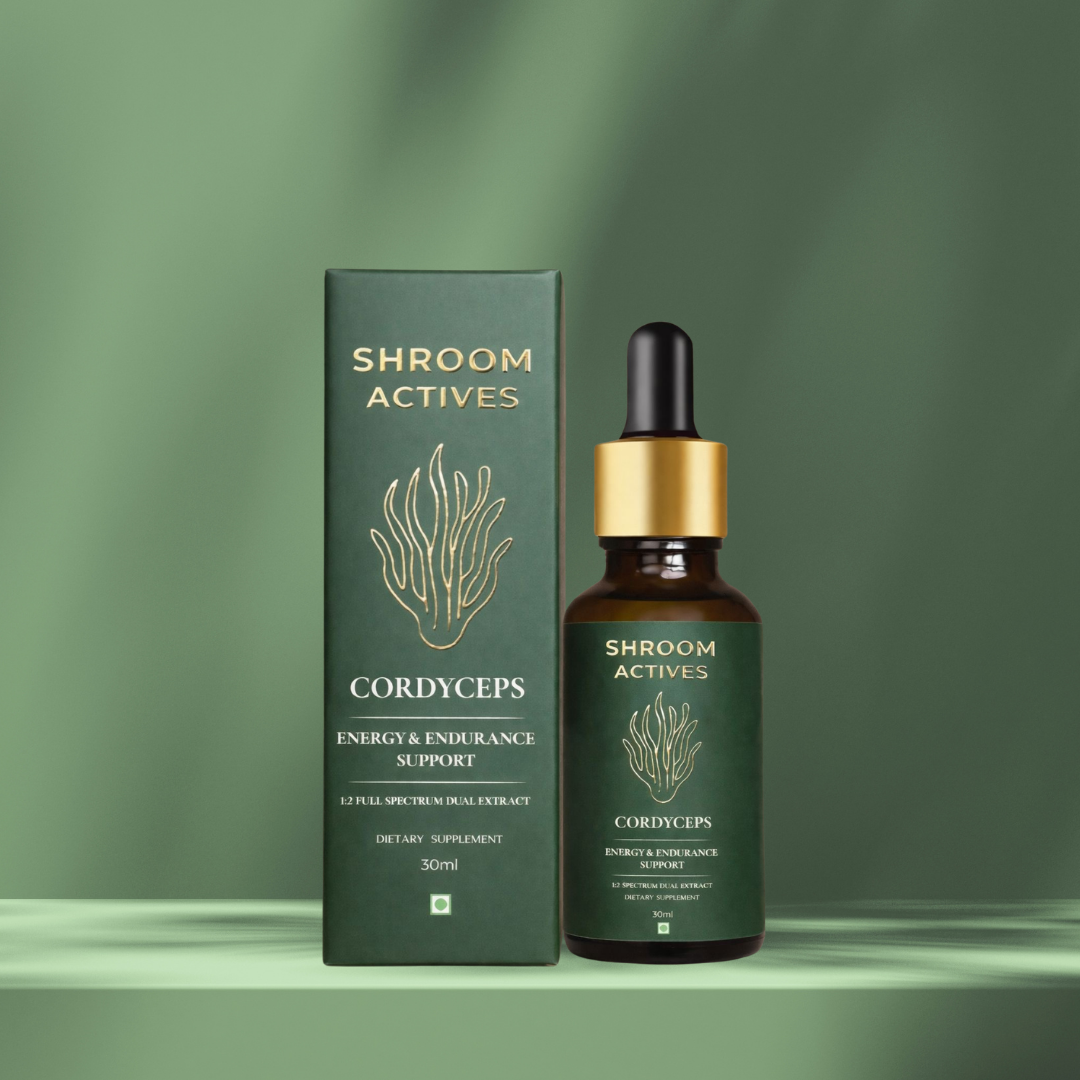
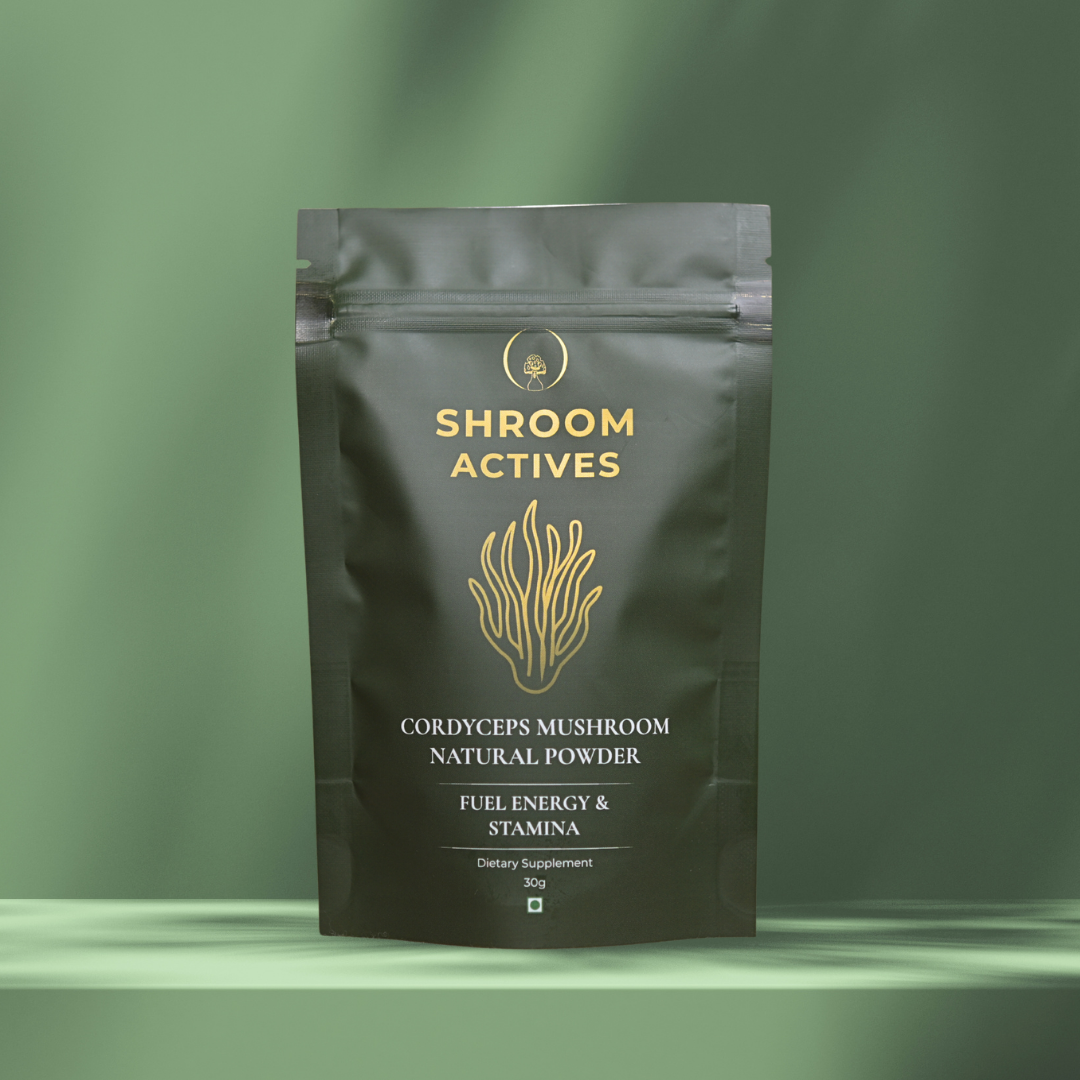
Shroom Actives’ Cordyceps Drops use 100% fruiting body extraction with declared beta-glucan content, batch-level COA, and FSSAI certification — cultivated in India under ICAR technology transfer standards.
References: Lanhers et al. (2017), European Journal of Sport Science; Chen et al. (2010), Journal of Alternative and Complementary Medicine; Rawson & Volek (2003), Journal of Strength and Conditioning Research.
Ready to try the real thing?
Every batch HPLC-verified. Every number on the label, real.