How Long Does Lion’s Mane Take to Work? What to Expect in the First 30 Days
One of the most common questions we get at Shroom Actives: “I’ve been taking Lion’s Mane for a week and I don’t feel anything. Is it working?”
The short answer: probably yes, but you won’t necessarily feel it yet. Here’s why — and what to actually expect, week by week, in the first 30 days.
Why Lion’s Mane Doesn’t Work Like Caffeine
Lion’s Mane works by stimulating Nerve Growth Factor (NGF) — a protein that supports the growth, maintenance, and survival of neurons. This is a gradual biological process, not an acute pharmacological one.
Caffeine blocks adenosine receptors and produces an effect within 30–60 minutes. You feel it immediately. Lion’s Mane stimulates NGF, which then signals neurons to grow and strengthen connections — a process that unfolds over days, weeks, and months.
This distinction matters enormously for setting realistic expectations. If you’re waiting to “feel” Lion’s Mane the same way you feel a pre-workout or an energy drink, you’ll be disappointed every time — not because it isn’t working, but because you’re measuring the wrong thing.
Week 1 (Days 1–7): Mostly Nothing Noticeable
Most people report little to no noticeable effect in the first week. This is normal and expected.
What’s happening biologically: NGF levels are beginning to respond to the hericenones and erinacines from the fruiting body extract. Neurons in the brain are receiving signalling molecules that trigger growth factor production. But the resulting structural changes — new synaptic connections, improved myelination, strengthened neural pathways — take time to accumulate into perceptible cognitive differences.
Some people do notice subtle changes in week one: slightly clearer thinking in the morning, marginally reduced mental fatigue by mid-afternoon. These early signals are real but easy to dismiss or attribute to placebo. Don’t over-analyse. Just keep taking it consistently.
What to track: Start a simple daily log. Rate your focus, mental energy, and mental clarity on a 1–10 scale each evening. This baseline data becomes valuable at the 30-day mark.
Week 2 (Days 8–14): First Subtle Shifts
Week two is where the first meaningful signals tend to emerge for most people — though not everyone, and not dramatically.
The most commonly reported early effects:
- Reduced mental fatigue — not more energy exactly, but a reduction in the “heaviness” of sustained cognitive work. Long focused sessions feel slightly less draining.
- Slightly sharper morning cognition — some people notice they feel more alert earlier in the morning without needing extra coffee.
- Improved verbal fluency — words come a little more easily during conversations or writing. This is one of the earliest and most commonly reported effects.
These effects are subtle enough that many people miss them if they’re not actively tracking. This is why the daily log started in week one matters — looking back at your week-one scores versus week-two scores often reveals improvement that didn’t register consciously in the moment.
Week 3 (Days 15–21): Clearer Cognitive Effects
By week three, most people on a quality fruiting body extract are noticing something. The effects are still not dramatic — this isn’t a nootropic movie moment — but they’re consistent enough to be attributable to the supplement rather than daily variation.
Commonly reported by week three:
- Improved focus duration — sustained attention on complex tasks is noticeably longer before mental fatigue sets in
- Better working memory — holding multiple pieces of information in mind simultaneously feels easier
- Reduced brain fog — the mental “cloudiness” that many people don’t even realise is their baseline until it starts lifting
- Some mood improvement — likely related to hippocampal NGF effects; some people report feeling more emotionally even-keeled
The 2009 Mori et al. clinical study (the landmark Lion’s Mane human RCT) showed statistically significant cognitive improvement at week 8 — but many participants reported noticing something earlier. Week three is where that earlier signal tends to appear.
Week 4 (Days 22–30): Consolidation
By the end of the first month, the effects are usually clear enough that most users are convinced they’re real. Looking back at the week-one baseline scores versus week-four scores typically shows meaningful improvement across focus, mental clarity, and cognitive endurance.
What’s changed biologically by week four:
- NGF levels have been elevated for several weeks, driving ongoing neuronal growth and synaptic strengthening
- Myelin sheath integrity may have improved — relevant for signal transmission speed and cognitive efficiency
- The hippocampus (critical for memory formation) has been receiving sustained NGF support
Week four is not the endpoint — it’s where you confirm the supplement is working and commit to longer-term use. The Mori et al. study ran for 16 weeks and showed continued improvement through that period. The benefits compound with consistent use.
What Affects How Quickly You Notice Results
Several factors influence how quickly Lion’s Mane produces noticeable effects:
Quality of the extract: This is the biggest variable. A high-potency fruiting body extract with 25–30% beta-glucans and confirmed hericenone content will work faster and more noticeably than a low-potency mycelium-on-grain product. If you’ve been taking Lion’s Mane for four weeks and noticed nothing, consider whether you’re taking a quality extract or a low-grade product.
Your baseline cognitive status: People with more pronounced brain fog, mental fatigue, or cognitive complaints tend to notice Lion’s Mane effects more clearly and quickly — there’s more room for improvement. Someone already performing at high cognitive capacity may notice subtler effects.
Consistency: Missing doses significantly slows results. NGF stimulation is cumulative — you need regular, consistent intake to build and maintain elevated NGF levels. Daily use is more effective than sporadic use.
Sleep quality: NGF synthesis and neuroplasticity are both strongly upregulated during sleep. If your sleep is poor, Lion’s Mane’s effects will be blunted. Consider pairing with Reishi if sleep is a limiting factor.
Stress levels: Chronic cortisol impairs hippocampal function and can mask Lion’s Mane’s cognitive benefits. If you’re under significant stress, adding Reishi may allow Lion’s Mane’s effects to be more apparent.
After 30 Days: What to Do Next
At the 30-day mark, compare your daily log from week one versus week four. You’re looking for patterns across focus, mental clarity, verbal fluency, and mental endurance.
If you’ve noticed clear improvement: Keep going. The benefits continue building. The Mori et al. study showed continued improvement through 16 weeks, with a notable decline when supplementation stopped — suggesting the effects are real and dependent on continued intake.
If you’ve noticed modest improvement: Consider whether your product quality is the limiting factor (check the beta-glucan percentage and source). Also consider whether sleep or stress is blunting the effects.
If you’ve noticed nothing: The most likely explanation is product quality — particularly if you’re using a budget product that doesn’t declare its beta-glucan content or specify fruiting body extraction. Switch to a verified quality product and restart the 30-day trial.
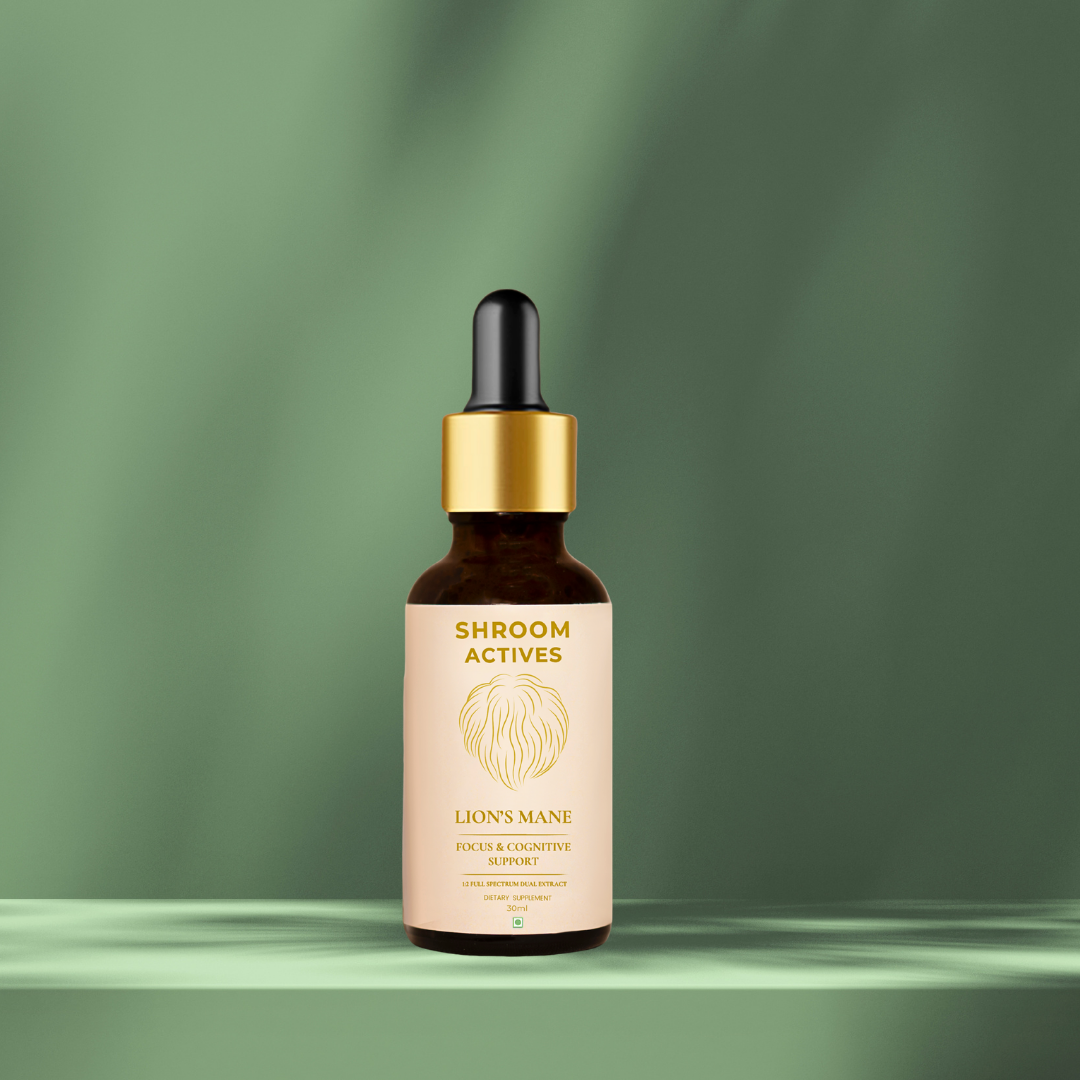
Shroom Actives Lion’s Mane
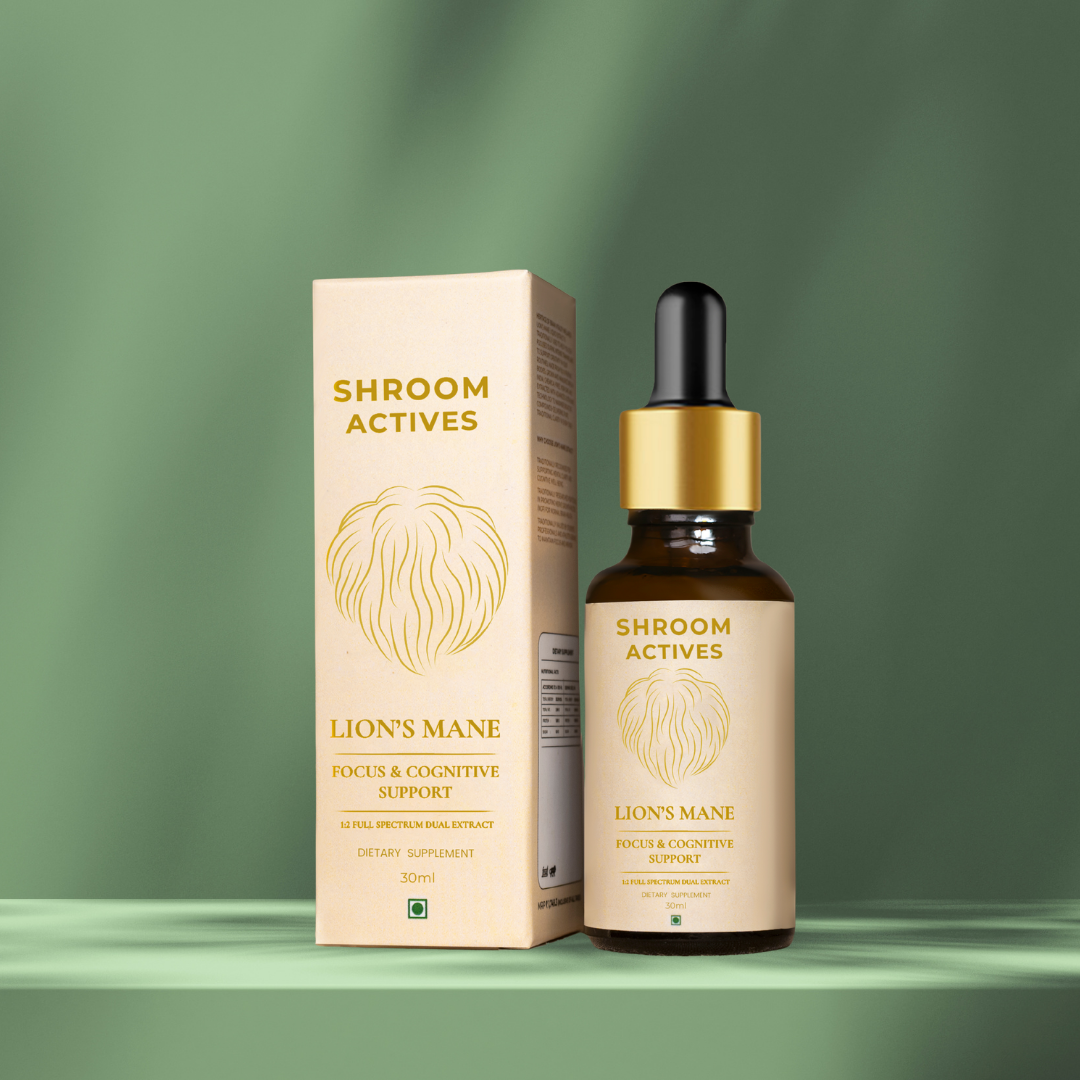
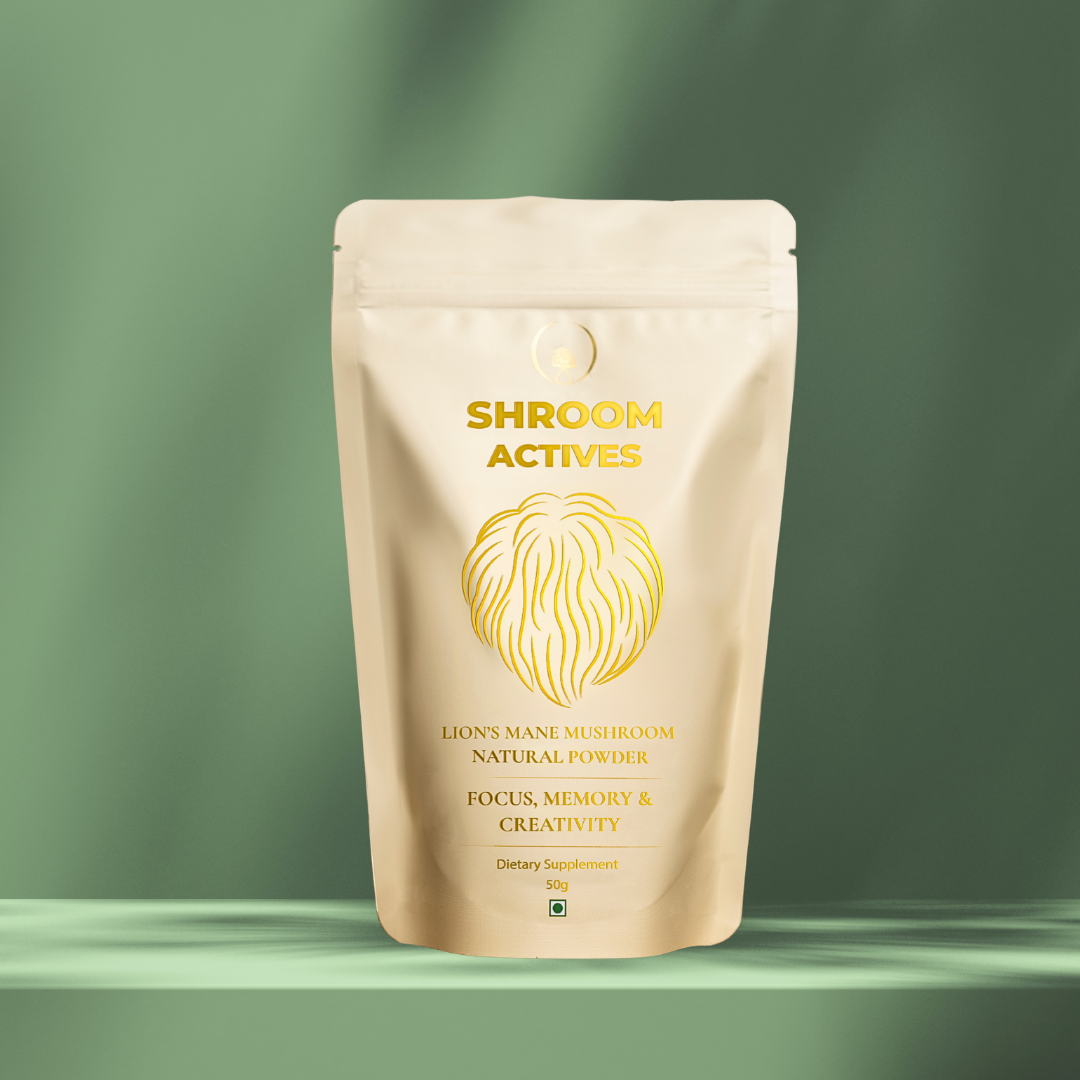
Our Lion’s Mane Drops and Lion’s Mane Powder both use 100% fruiting body extraction with declared beta-glucan content, batch-level third-party COAs, and FSSAI certification. Every product page shows the exact beta-glucan percentage for that SKU — so you know what you’re getting before you buy.
Free shipping above ₹999. Use code ACTIVE10 for 10% off your first order.
References: Mori et al. (2009), Phytotherapy Research; Lai et al. (2013), Evidence-Based Complementary and Alternative Medicine; Nagano et al. (2010), Biomedical Research.
Ready to try the real thing?
Every batch HPLC-verified. Every number on the label, real.