Why Fruiting Body Matters: How to Read a Mushroom Supplement Label in India
Walk into any supplement store in India and you’ll find dozens of mushroom products — Lion’s Mane capsules, Reishi extracts, Cordyceps powders. Prices range from ₹400 to ₹3,500. The ingredients list on each one looks similar. Yet the actual quality difference between them is enormous.
Most Indian consumers don’t know how to read a mushroom supplement label. This post changes that.
The Most Important Thing on the Label: Fruiting Body vs. Mycelium
This is the single biggest quality divide in the mushroom supplement industry — and most brands don’t want you to know about it.
A mushroom has two main parts:
The fruiting body is what most people recognise as the mushroom — the visible cap and stem. This is where the bioactive compounds are concentrated: beta-glucans, triterpenes, hericenones, erinacines, cordycepin. These are the compounds that have been studied for their health effects.
The mycelium is the root-like network that grows underground or through a substrate. In the lab, mycelium is typically grown on grain — usually rice or oats. The problem: when you test “mycelium on grain” supplements, a large percentage of what’s inside is starch from the grain, not active mushroom compounds. A 2017 analysis published in Frontiers in Microbiology found that many mycelium-on-grain products contained less than 5% actual fungal material by weight.
What to look for: The label should explicitly say “fruiting body extract.” If it says “mycelium,” “full spectrum,” or “whole mushroom” without clarifying the source, treat it with suspicion.
Beta-Glucan Percentage: The Quality Benchmark
Beta-glucans are the primary bioactive compounds in medicinal mushrooms. They are what researchers measure when assessing potency. A quality mushroom supplement will declare its beta-glucan content on the label.
What to look for:
- A declared beta-glucan percentage — ideally 20–40% for a concentrated extract
- The word “extract” rather than “powder” (extracts are more concentrated)
- The extraction ratio — “10:1” means 10kg of mushroom was used to produce 1kg of extract
If a brand doesn’t tell you the beta-glucan content, they almost certainly have something to hide. A reputable manufacturer knows their beta-glucan numbers — they test for it. Not declaring it is a choice.
In India, this is a particularly important standard because FSSAI regulations for mushroom supplements are still evolving. The market has brands operating at vastly different quality levels, and the label is often your only signal.
Third-Party Lab Testing and the COA
A Certificate of Analysis (COA) is a document from an independent laboratory confirming what’s actually in the product. A genuine COA will show:
- Active compound levels (beta-glucan percentage, specific bioactives)
- Heavy metal testing (lead, arsenic, mercury, cadmium)
- Microbial safety (E. coli, Salmonella, total plate count)
- Pesticide residue (if relevant)
The key word is third-party — the lab should be independent, not the brand’s own internal lab. Anyone can print impressive-looking test results. Third-party COAs from accredited labs (NABL-accredited labs in India, or internationally recognised labs) are what counts.
The QR code test: Some brands are now printing QR codes on their packaging that link directly to the batch-specific COA. This is the gold standard for transparency — it means every batch can be verified independently, not just a generic template test result. If a brand does this, it’s a strong signal of genuine quality commitment.
Extraction Method: Water, Alcohol, or Dual?
Not all bioactive compounds in mushrooms are soluble in the same way. Some require water extraction, others require alcohol extraction:
Water extraction pulls out beta-glucans and polysaccharides — the immune-supporting compounds.
Alcohol (ethanol) extraction pulls out triterpenes — the compounds in Reishi associated with stress relief, liver support, and sleep quality.
Dual extraction uses both methods to capture the full spectrum of bioactives. For Reishi in particular, a dual-extracted product is significantly more complete than a water-only extract. For Lion’s Mane, water extraction is typically sufficient since the key compounds (hericenones) are water-soluble.
A quality label will specify the extraction method. If it just says “extract” without further detail, it’s likely water-only — which is fine for some mushrooms, but incomplete for others like Reishi.
FSSAI Certification
In India, any food supplement sold commercially must have FSSAI (Food Safety and Standards Authority of India) registration or licensing. This is the legal baseline — not a quality signal by itself, but its absence is a red flag.
Check the FSSAI number on the label and verify it at foscos.fssai.gov.in if you want to confirm it’s real.
What Good Labels Look Like vs. What to Avoid
Good label signals:
- “100% fruiting body extract”
- “Beta-glucan content: 30%” (or similar declared percentage)
- “Dual extracted” or “water extracted” (specific method stated)
- QR code linking to batch COA
- FSSAI number
- Extraction ratio (e.g., 8:1, 10:1)
Warning signs:
- “Whole mushroom powder” (likely not extracted)
- “Full spectrum” (often mycelium on grain)
- No beta-glucan percentage declared
- No COA available
- Vague claims like “5000mg per serving” without specifying what’s in those 5000mg
How Shroom Actives Approaches This
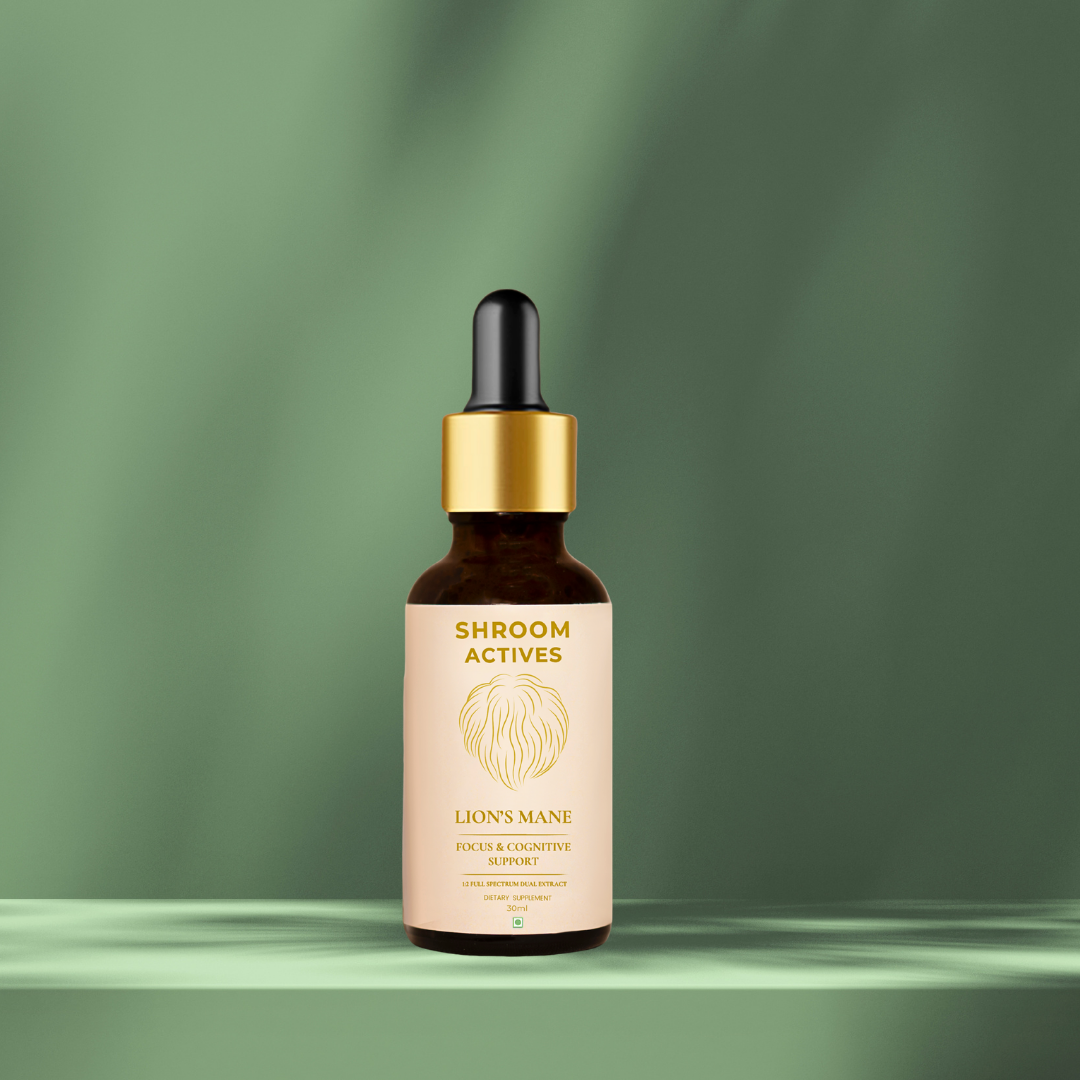
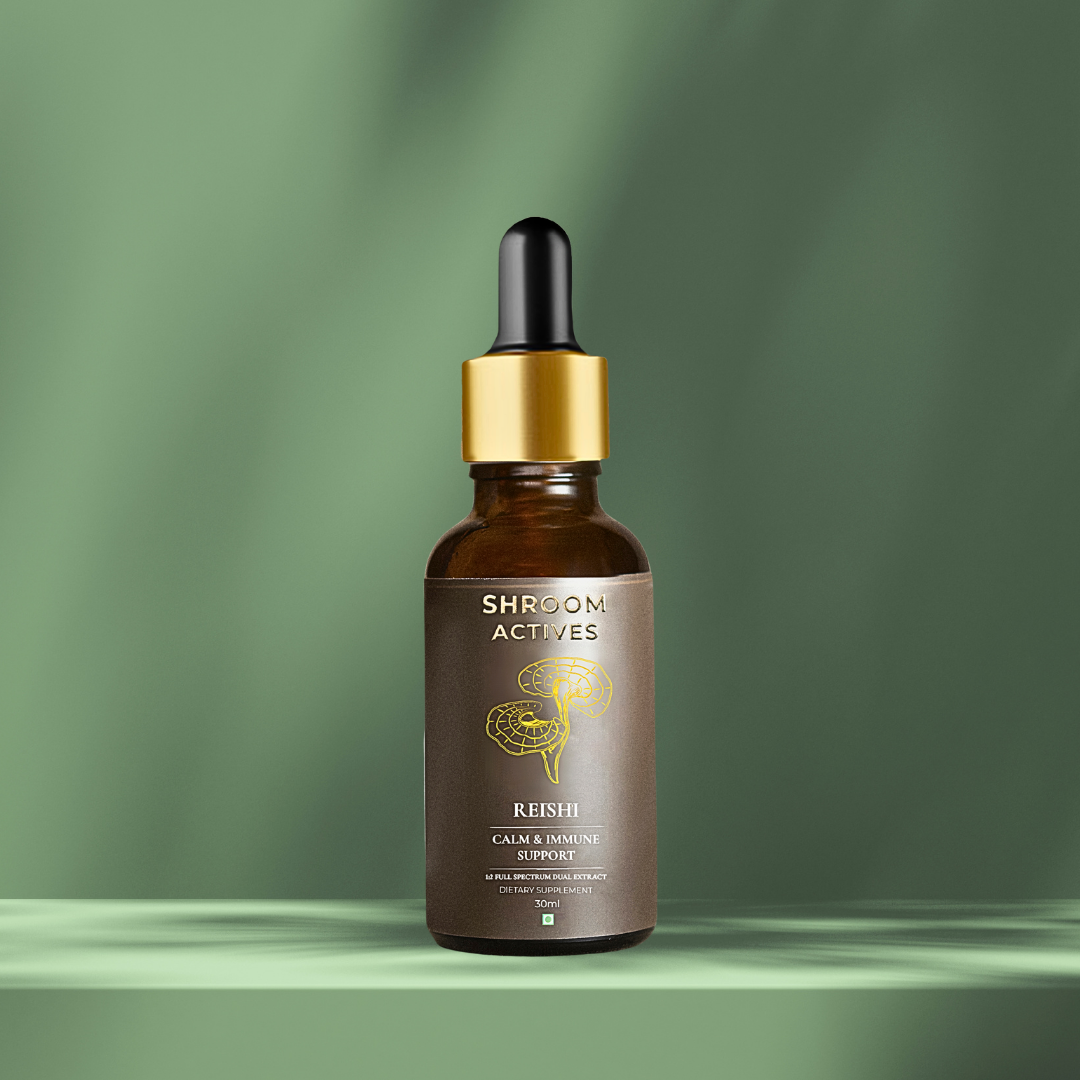
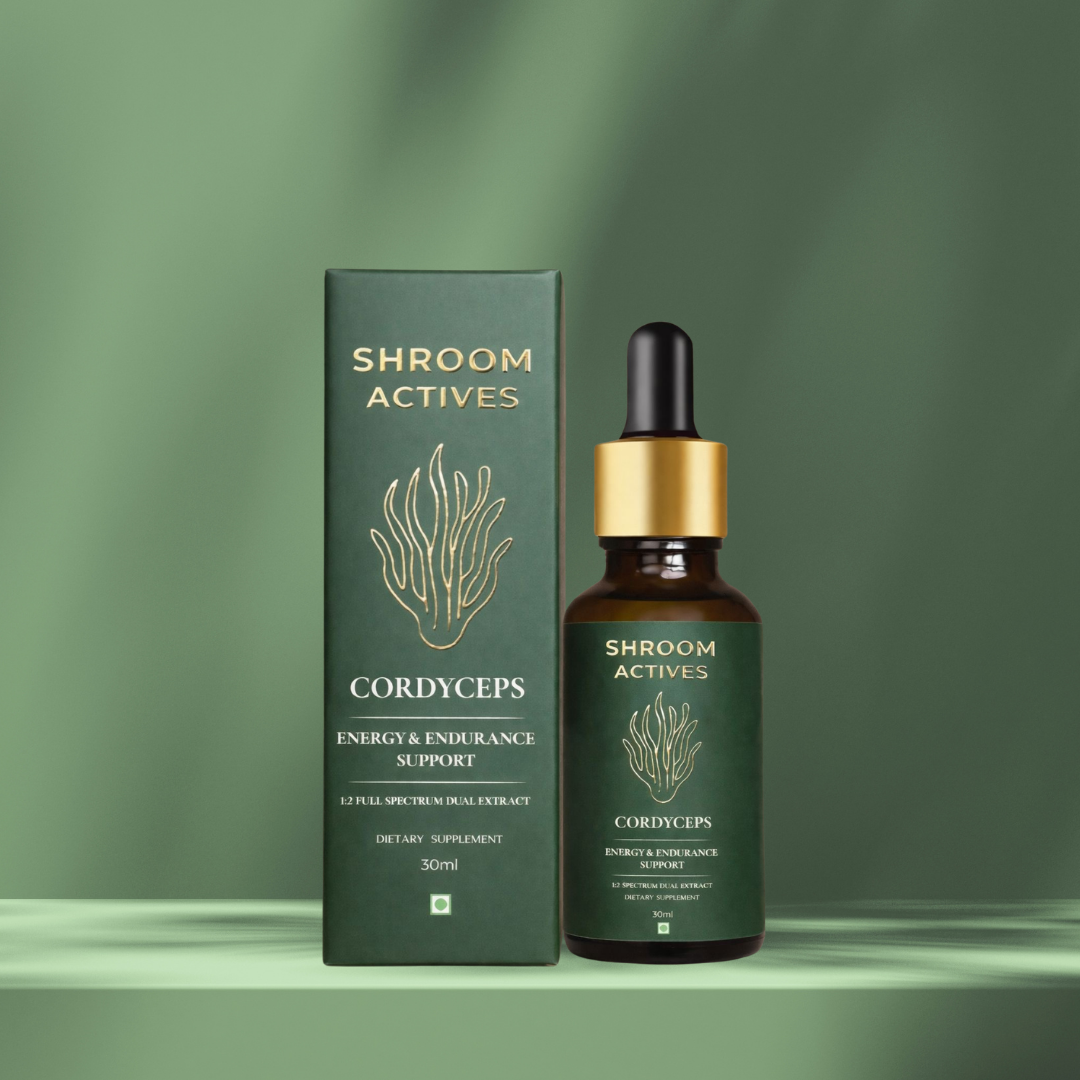
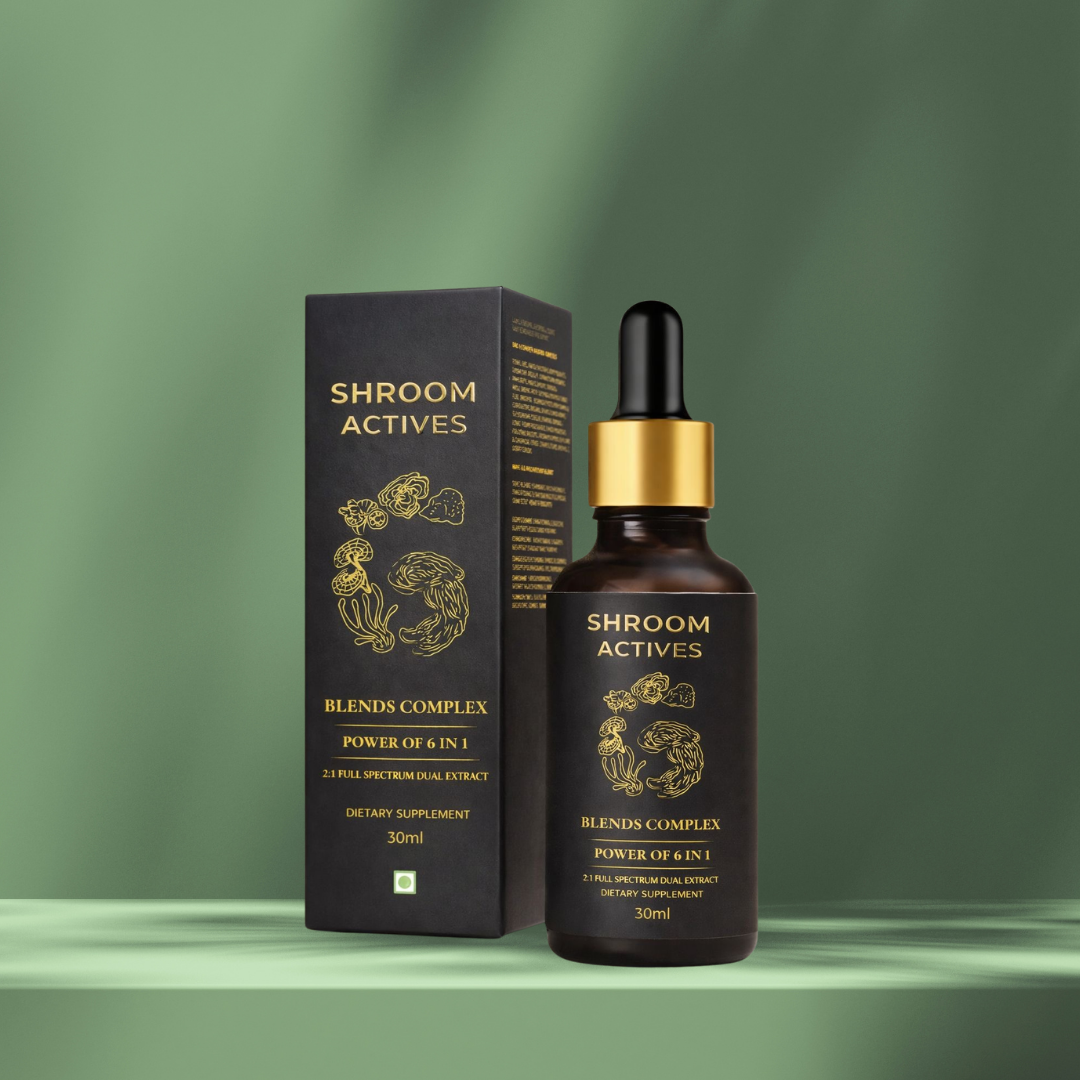
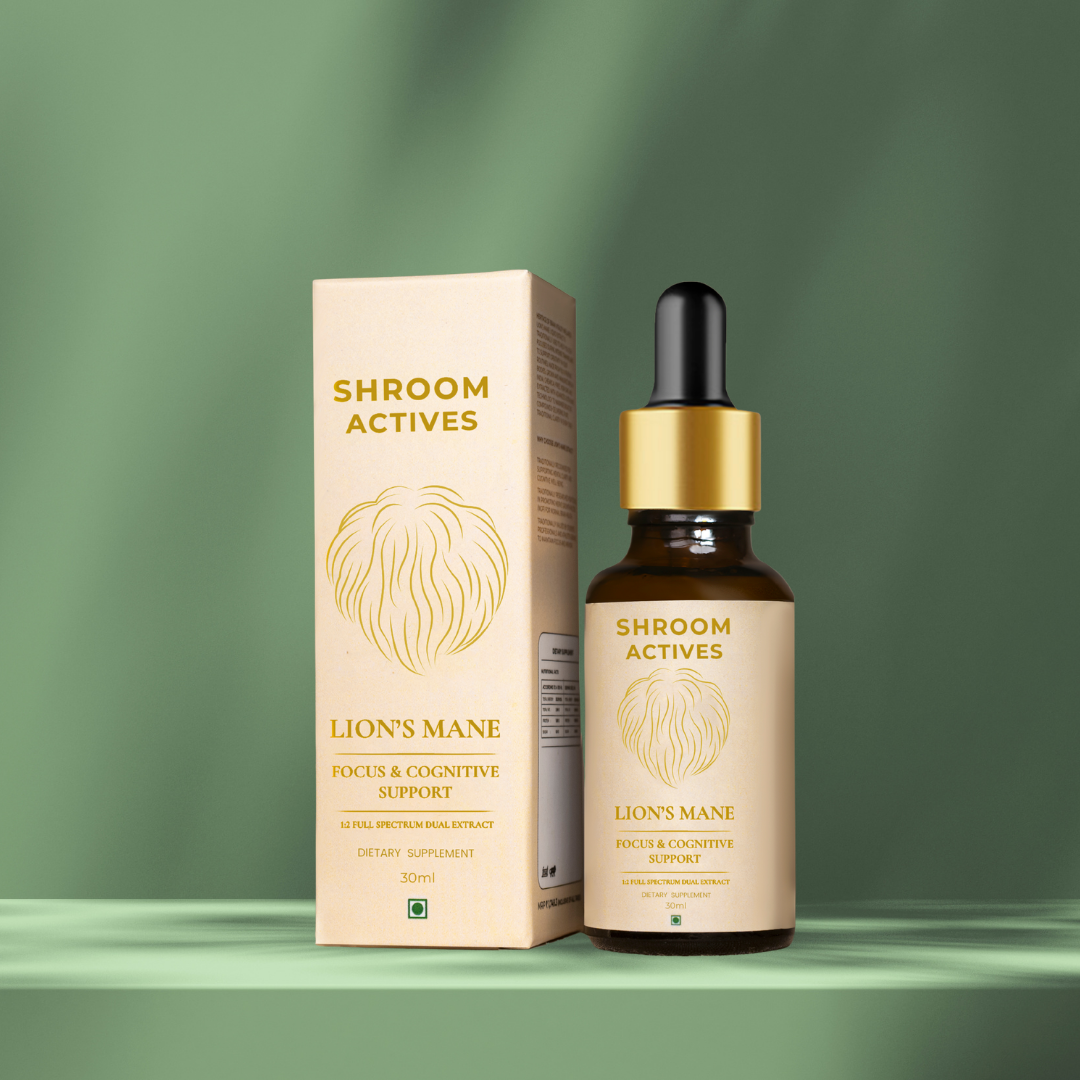
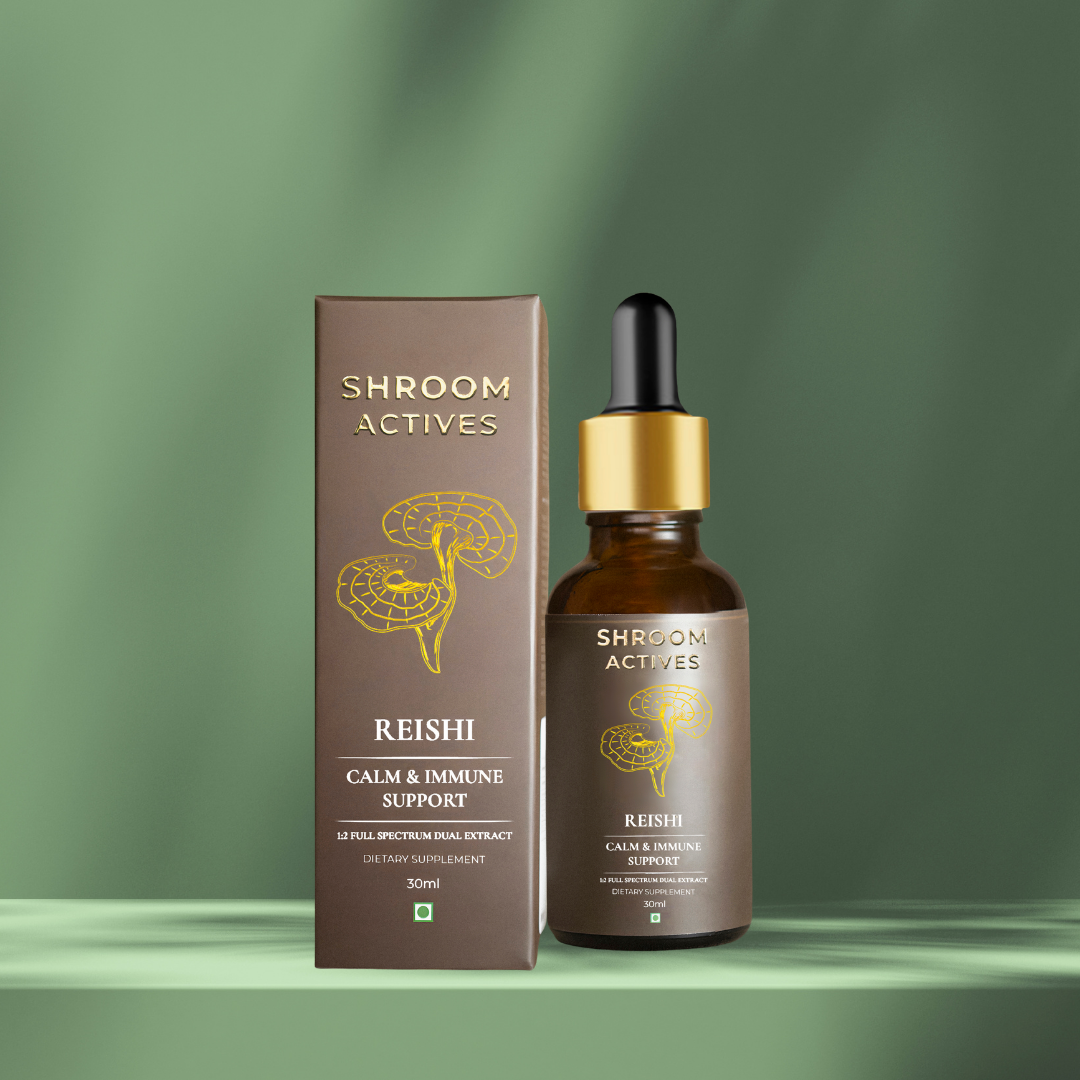
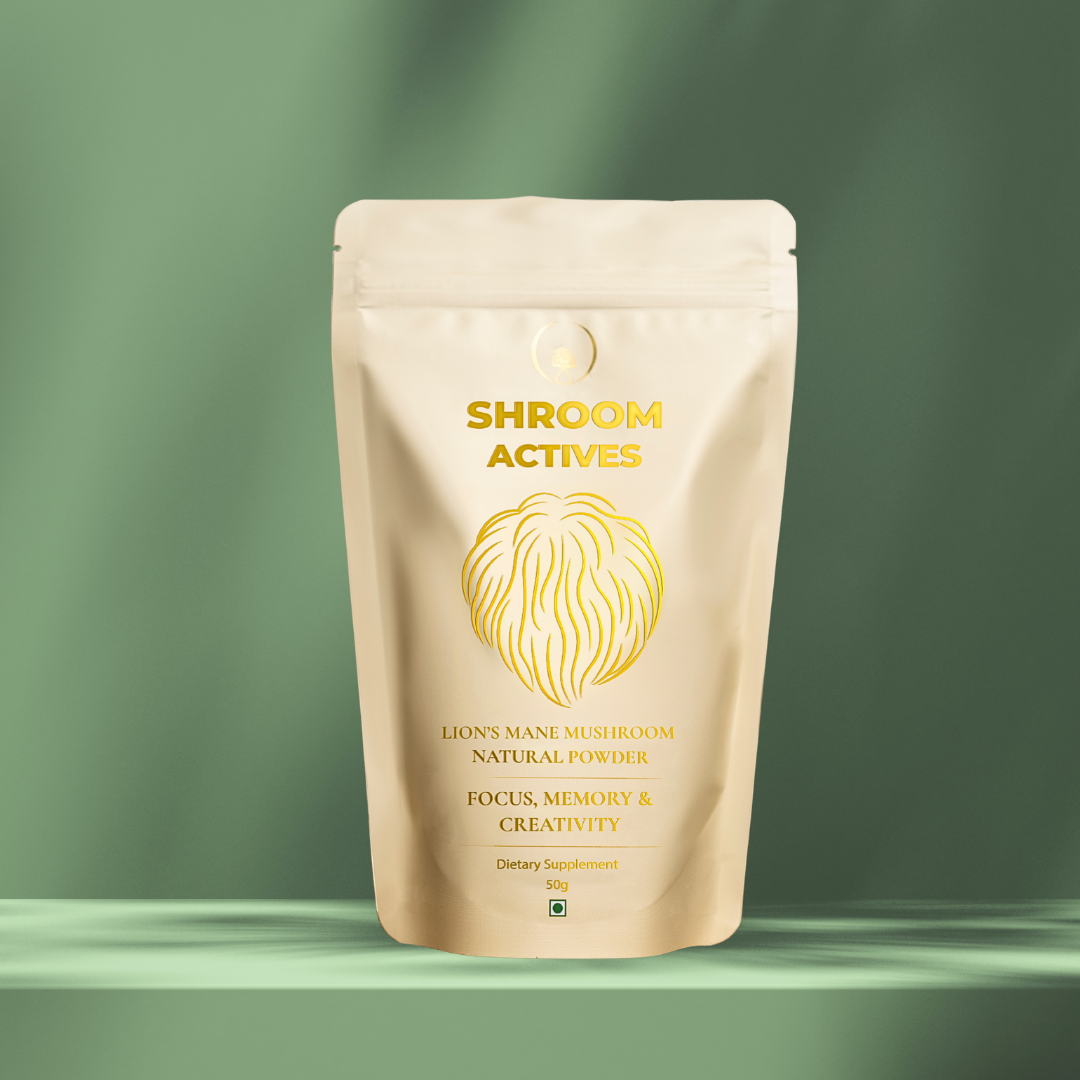
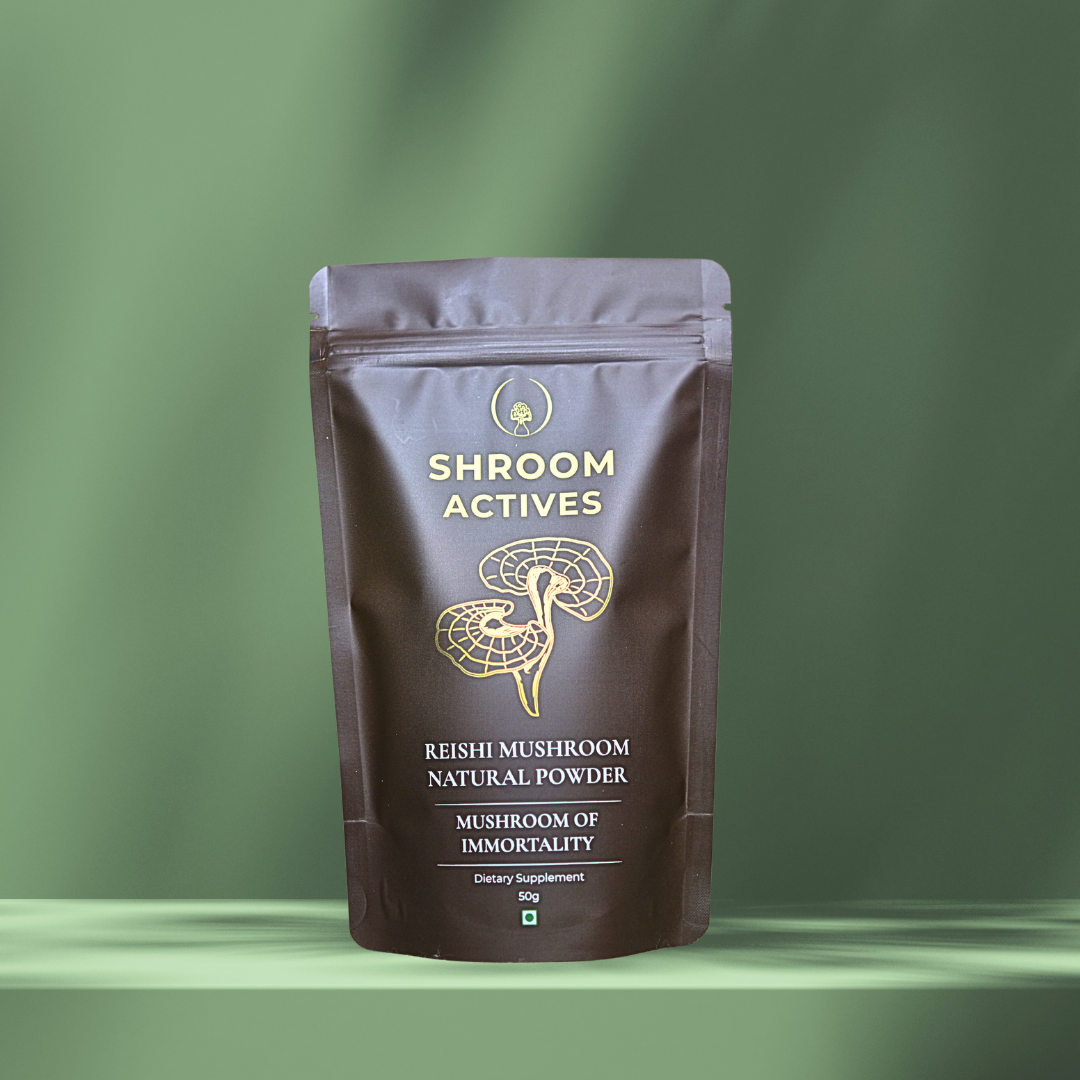
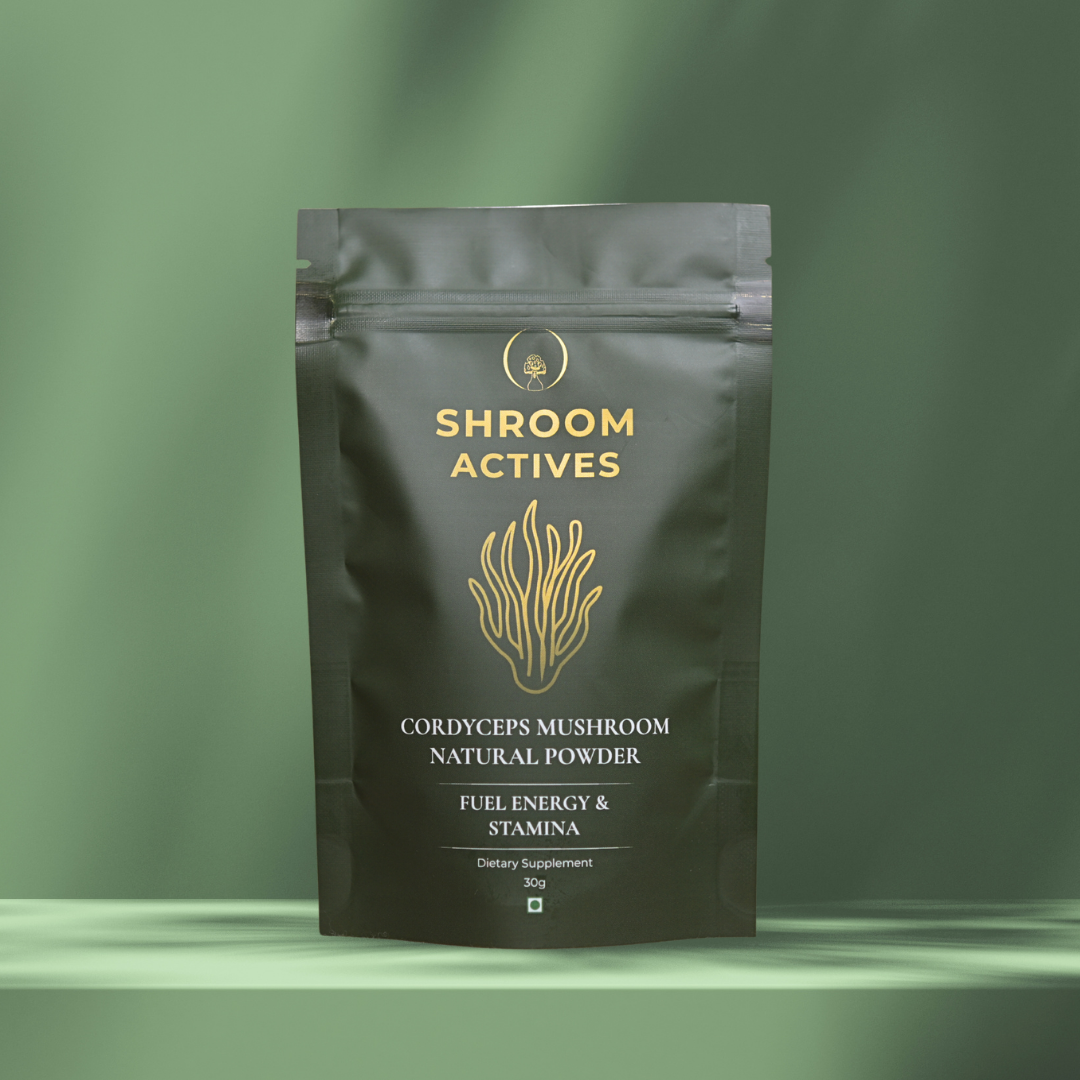
We built Shroom Actives specifically because we were frustrated with the lack of transparency in the Indian mushroom supplement market. Every product we make uses 100% fruiting body extraction. We declare our beta-glucan percentages on every product. Every batch has a QR-linked COA from an independent lab. We’re FSSAI certified and produced under ICAR technology transfer standards.
We say this not to sell you something, but because these are the standards we think every mushroom supplement brand should meet — and very few in India currently do. Use this checklist on every brand you consider, including ours.
View our products and their batch COAs at shroomactives.com.
The Short Version
When evaluating any mushroom supplement in India, ask four questions:
- Is it fruiting body extract or mycelium on grain?
- Is the beta-glucan percentage declared?
- Is there a third-party COA available for this batch?
- Is it FSSAI certified?
If the answer to all four is yes, it’s worth considering. If any are missing, keep looking.
References: Patel & Goyal (2012), 3 Biotech; Stamets & Zwickey (2014), Evidence-Based Complementary and Alternative Medicine; Blagodatski et al. (2018), Oncotarget.
Ready to try the real thing?
Every batch HPLC-verified. Every number on the label, real.