Reishi Mushroom for Sleep and Stress: India’s Most Overlooked Supplement
Reishi mushroom doesn’t get the same attention as Lion’s Mane or Cordyceps in India’s wellness conversation. It’s quieter, less dramatic, and its effects are harder to quantify than “better focus” or “more endurance.” But for the specific problem that India’s urban population is quietly drowning in — chronic stress, poor sleep quality, and persistent low-grade anxiety — Reishi may be the most practically useful functional mushroom available.
What Is Reishi?
Ganoderma lucidum — known as Reishi in Japanese, Lingzhi in Chinese, and Mannentake (“10,000-year mushroom”) in traditional medicine — has been used for over 2,000 years across East and South Asia. In Ayurvedic and traditional Chinese medicine contexts, it was considered a supreme tonic: something taken not to treat illness, but to maintain equilibrium and promote longevity.
Modern pharmacological research has identified over 400 bioactive compounds in Reishi. The most studied are triterpenes (particularly ganoderic acids) and beta-glucan polysaccharides. These operate through different mechanisms and explain Reishi’s wide range of reported effects.
What the Science Says
1. Stress and Cortisol Regulation
Reishi is classified as an adaptogen — a compound that helps the body regulate its stress response. The primary mechanism is interaction with the HPA axis (hypothalamic-pituitary-adrenal axis), which controls cortisol release.
Ganoderic acids in Reishi have been shown to modulate cortisol secretion and reduce the adrenal response to stress in animal models. Human evidence is more limited, but multiple studies show reduced markers of physiological stress in Reishi supplementers versus controls. For the Bengaluru software engineer who’s been running on cortisol and coffee since 2020, this is directly relevant.
2. Sleep Quality
A 2012 study published in the Journal of Ethnopharmacology found that Reishi polysaccharides significantly increased total sleep time and non-REM sleep in animal models by modulating GABAergic pathways — the same pathways targeted by prescription sleep medications, but through a gentler, non-sedating mechanism.
Human studies on Reishi and sleep are limited but supportive. A 2020 trial with cancer patients (a population with significant sleep disruption) found improved sleep quality and reduced fatigue with Reishi supplementation. The effect isn’t a “knockout” sedation — it’s more of a gradual settling of the nervous system that makes sleep easier to achieve and maintain.
This is why Reishi is typically recommended for evening use — stirred into warm milk, chamomile tea, or a night-time golden milk — rather than taken as a morning supplement.
3. Immune Modulation
Beta-glucans in Reishi have well-documented immunomodulatory effects. They appear to both stimulate immune activity when it’s suppressed (like during illness or high stress) and dampen it when it’s overactive (as in autoimmune conditions). This bidirectional regulation is characteristic of true adaptogens.
A 2006 systematic review of randomised controlled trials found that Reishi supplementation was associated with improved immune markers including NK cell activity, T-lymphocyte count, and interleukin levels.
4. Liver Support
Ganoderic acids have hepatoprotective (liver-protective) properties. Multiple studies show Reishi extracts reduce markers of liver inflammation and oxidative stress. For India’s population — where non-alcoholic fatty liver disease (NAFLD) is now estimated to affect 25–30% of urban adults — this is a meaningful secondary benefit.
What’s Specifically Relevant for India
India has a stress problem. The Indian Psychiatry Society estimates that over 20% of Indians suffer from some form of mental disorder, with anxiety and stress-related conditions being the fastest growing. Simultaneously, sleep disorders are at epidemic proportions — an ASSOCHAM study found that 93% of Indian professionals report sleep deprivation.
Most responses to this involve either lifestyle advice people don’t have bandwidth to follow, or pharmaceutical interventions with significant side effects. Reishi sits in a useful middle ground: a plant-based, non-habit-forming supplement with genuine pharmacological mechanisms behind its effects on the stress response and sleep architecture.
It’s particularly relevant for:
- Urban professionals dealing with chronic workplace stress
- People with disrupted sleep due to irregular schedules or screen exposure
- Those recovering from illness or looking to support immune function
- Anyone with elevated stress markers or a family history of immune disorders
Powder vs. Drops: Which Form Works Better?
Reishi is available as powder (to mix into drinks or food) and as liquid extract drops. Both can be effective, but there are differences worth knowing:
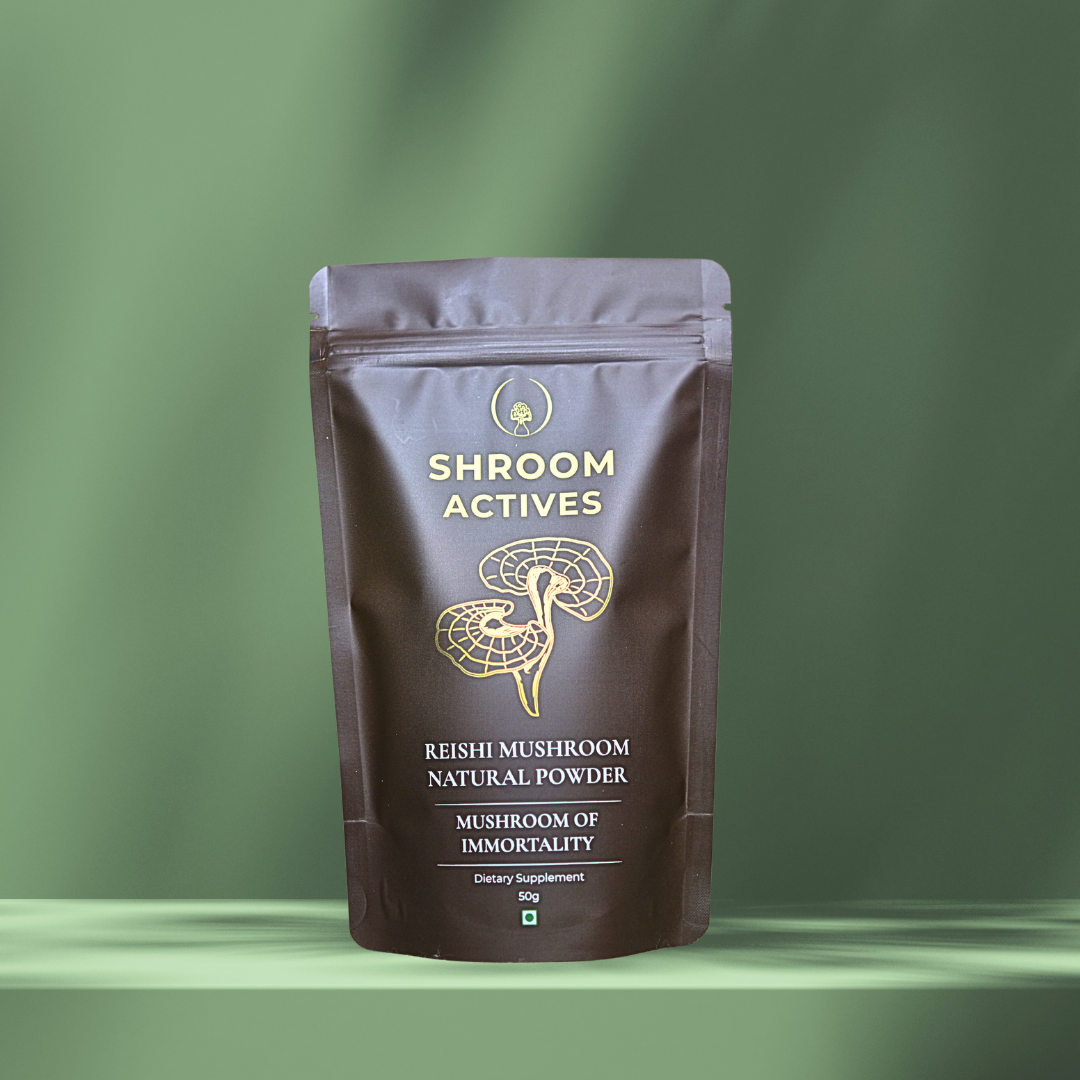
Powder is typically easier to incorporate into evening routines — stirred into warm milk or a smoothie. It’s more familiar as a format and easier to measure.
Liquid extract (drops) absorbs faster sublingually and offers more precise dosing. For people who want to feel the effect more quickly or have trouble with powders, drops are often preferred.
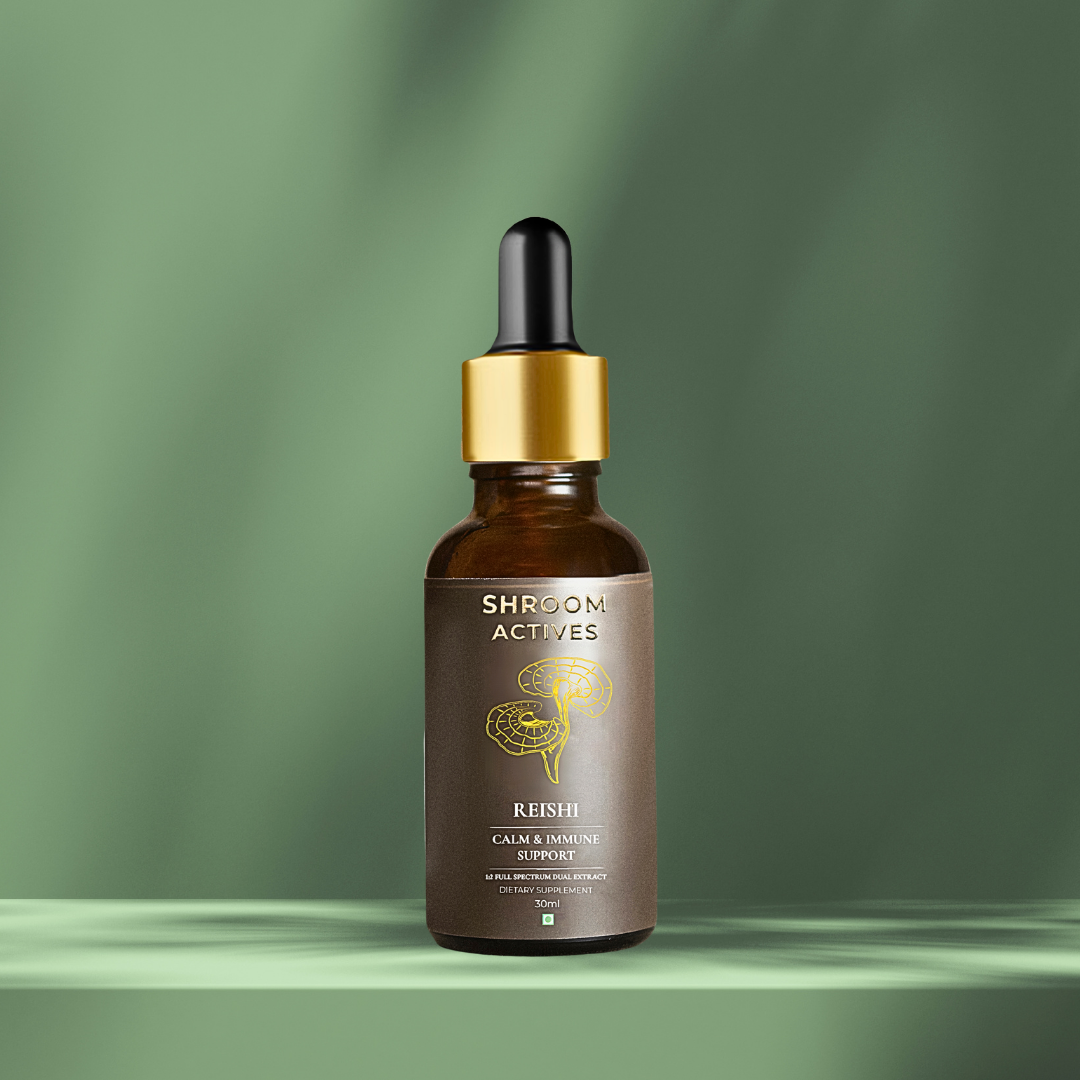
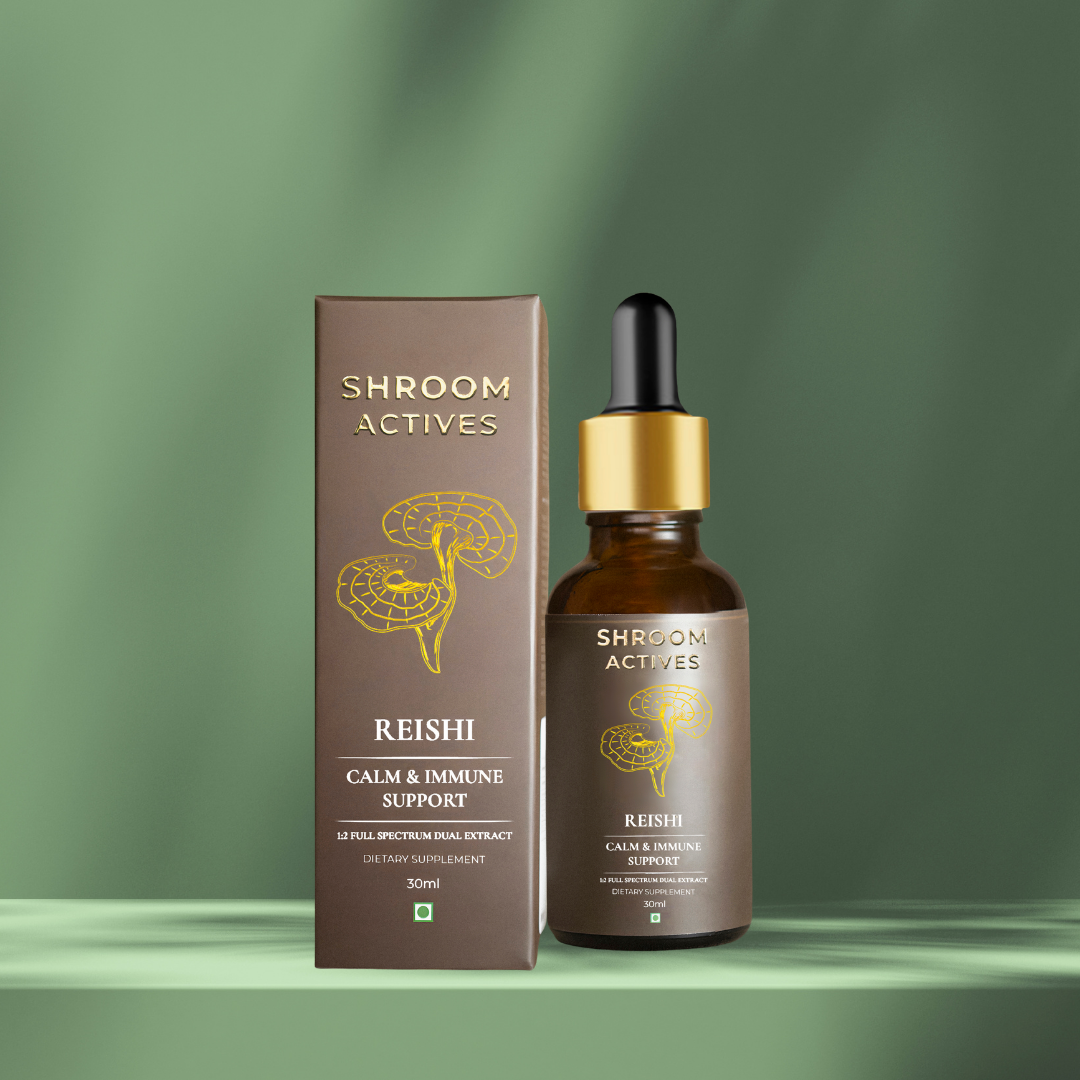
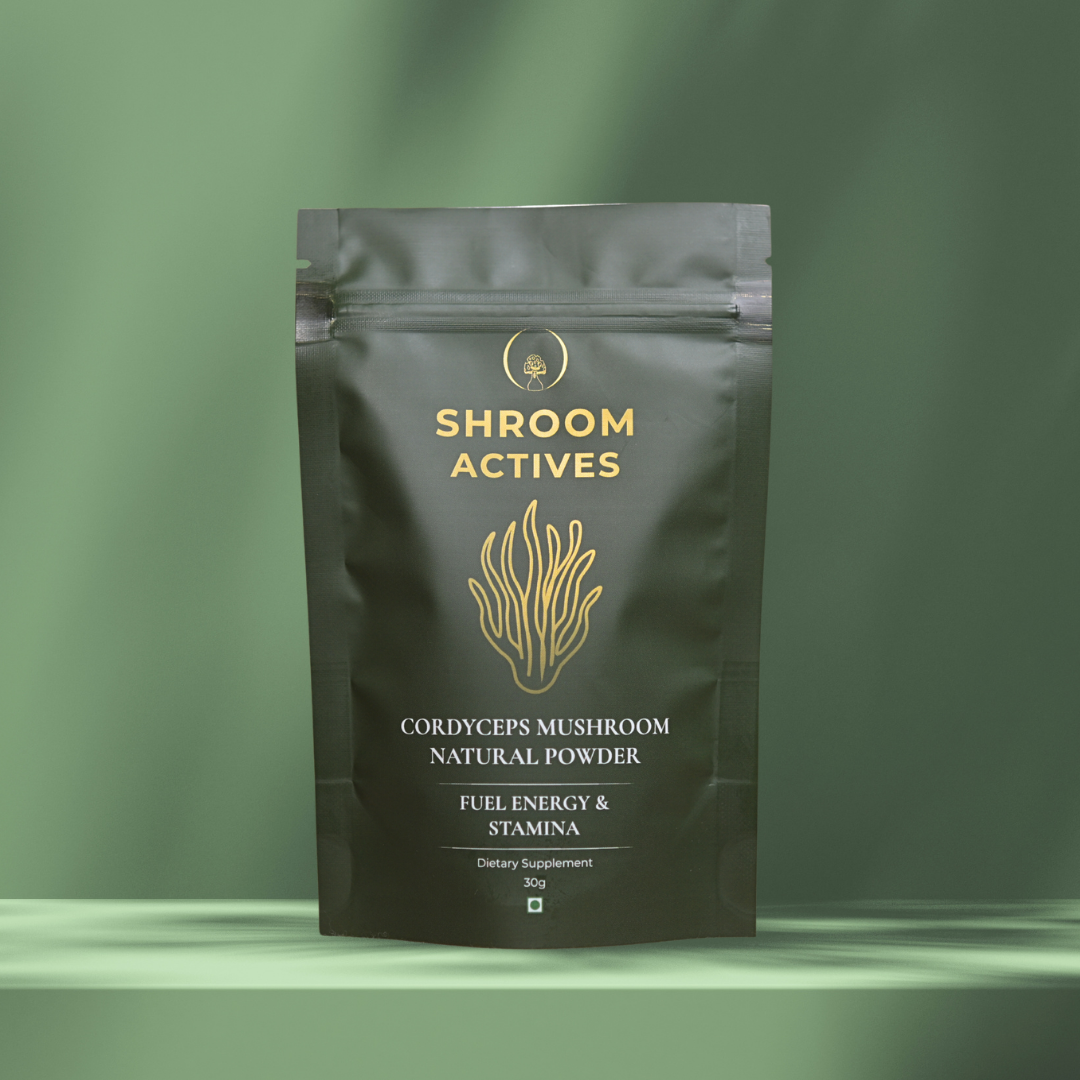
Both Shroom Actives’ Reishi Drops and Reishi Powder use 100% fruiting body extraction with declared beta-glucan percentages and batch-level COAs. The choice between them is largely a matter of personal preference and routine.
How Long Does Reishi Take to Work?
Unlike caffeine, Reishi’s effects are cumulative rather than immediate. Most people report noticing improved sleep quality within 2–3 weeks of consistent use. Stress resilience effects tend to show up at the 4–6 week mark. Some people notice nothing for the first few weeks and then realise, looking back, that they’ve been sleeping better or handling stress more calmly.
It’s the kind of supplement that’s easy to underestimate while it’s working.
What to Look for in a Reishi Supplement
The same label-reading principles apply as for any mushroom supplement:
- Fruiting body extract — not mycelium on grain
- Dual extraction — Reishi’s triterpenes require alcohol extraction; a water-only extract misses a significant portion of the bioactives
- Declared beta-glucan content
- Third-party COA — heavy metal testing is particularly important for Reishi, which is often imported from unverified sources
- FSSAI certification
Bottom Line
Reishi is the most underrated functional mushroom in India’s supplement market. While Lion’s Mane gets attention for cognition and Cordyceps for performance, Reishi quietly addresses what might be the most pressing underlying health issue for India’s urban population: the physical and neurological toll of chronic stress.
If you’re sleeping poorly, feeling wired-but-tired, or just running on cortisol — Reishi is worth a serious 6-week trial. Give it the time it needs, take it consistently in the evenings, and track your sleep quality and stress levels honestly.
References: Tang et al. (2006), Immunological Investigations; Cui et al. (2012), Journal of Ethnopharmacology; Zhao et al. (2020), Frontiers in Pharmacology; Indian Psychiatry Society Annual Report (2023).
Ready to try the real thing?
Every batch HPLC-verified. Every number on the label, real.